AI Tools for Paralegals: What Actually Helps
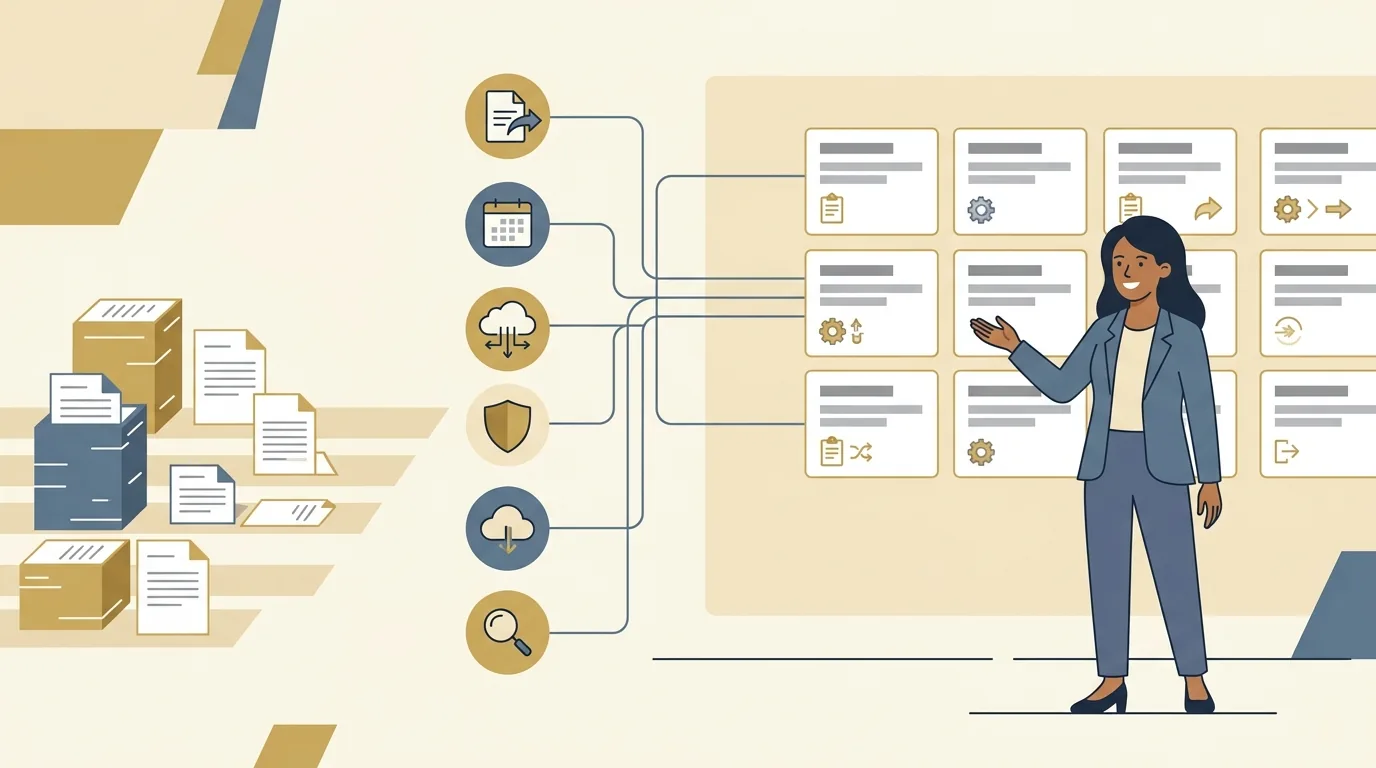
The AI tools that genuinely help paralegals are the ones aimed at a specific task you already do, not the ones marketed as an "AI paralegal." Four categories carry almost all the value: discovery drafting software such as Briefpoint for interrogatories, requests for production and Bates-cited production packages; e-discovery platforms such as Everlaw and DISCO for summarizing and searching a large record; deposition and transcription services such as Steno, Parrot, Skribe, Rev and Verbit for turning testimony into searchable text fast; and practice management AI such as Clio's Manage AI for scheduling, matter admin and time capture. For everything that touches no client confidences, a general chatbot on a firm-approved account is honestly enough, and saying so out loud is the part most tool lists skip.
We run a listings directory. We do not sell any of these products, and vendors cannot pay for a better position, so this guide can name where the cheap answer beats the expensive one.
This is software evaluation and industry analysis, not legal advice, and not guidance on your own professional responsibility obligations. Your supervising attorney and your jurisdiction's rules govern all of that.
Which paralegal tasks does AI genuinely speed up?
The honest list is shorter than the marketing list, and it clusters around work that is high volume, structured, and reviewable. If a task produces a document you were always going to read line by line anyway, AI makes it faster. If a task requires a judgment call you would have to defend, AI mostly adds a step.
Four properties make a task a good candidate:
- It is repetitive. You do the same shape of work across many matters, so the model has an obvious pattern to follow.
- The output is verifiable. You can check it against a source document, a Bates number, a transcript line, or a calendar.
- It is currently a bottleneck. Speeding up something that was never slow buys nothing.
- The confidentiality question has a clear answer. Either the material stays inside a tool your firm has vetted, or it never leaves your desk.
Here is the map from real paralegal tasks to the tools in our directory that actually do them. Everything named below is verified active as of our last review, which matters more than it sounds like it should, because several tools still recommended in older roundups have been acquired, renamed, or folded into a parent product.
| Paralegal task | What to use | Why this one |
|---|---|---|
| Client and matter intake, scheduling, deadline tracking | Clio (Manage AI) and the rest of practice management | The AI sits inside the system that already holds your matters, so there is nothing to copy between tools |
| Drafting discovery responses and requests | Briefpoint | Purpose-built for interrogatories, requests for admission and requests for production, and it assembles Bates-cited production packages |
| Reviewing and summarizing a large production | Everlaw, DISCO, and the wider e-discovery category | Both ship AI assistants that answer questions across the evidence record instead of one document at a time |
| Case chronologies from a document set | Everlaw, DISCO, Filevine AI | Chronology building is summarization plus date extraction, which is exactly what record-grounded assistants are good at |
| Remote depositions and same-day transcript drafts | Steno, Parrot, Skribe, and depositions and court reporting | Certified reporting plus AI transcript tooling, rather than raw speech-to-text with no legal workflow around it |
| Bulk transcription of calls, interviews, recordings | Rev, Verbit | Priced per minute or per seat, so it scales down to one file without a procurement cycle |
| Searching and clipping testimony after the fact | Steno, Skribe | Transcript search and clip tools turn a 300 page transcript into something you can actually cite from |
| Cite-checking a brief against the record | Clearbrief | Runs inside Microsoft Word and checks assertions against the underlying documents |
| Medical records review and demand packages | EvenUp, Filevine AI | Built for the personal injury workflow specifically, not adapted to it |
| Billing narratives and time entry cleanup | Clio (Manage AI), or a general chatbot with no client detail | The task is rewriting your own words, so the bar is low and the confidentiality risk is what you make it |
| Routine internal drafting, checklists, plain-English explanations | A firm-approved general chatbot | No legal-specific grounding is required, so paying legal-tool prices for it is waste |
Two things about that table are worth stating plainly. First, no single product covers more than two or three rows, which is why "the best AI tool for paralegals" is the wrong question. Second, three of the rows are answered by something you may already be paying for, inside your practice management system or your firm's existing chatbot subscription.
What works for document summaries and chronologies?
Summaries are where AI is genuinely strong and where the failure mode is subtle. A model will summarize a document it has, accurately enough to be useful, in seconds. It will also summarize a document it does not have, fluently, if you ask it to.
That distinction is the whole game. Tools that are grounded in a specific record, meaning they only answer from documents you loaded, behave very differently from a chatbot working off a pasted excerpt and its training data. Everlaw and DISCO both build their AI assistants around the evidence set, so a summary comes back attached to the documents it came from. Filevine AI does the same thing inside a case management system, with medical record summarization as a specific strength.
For chronologies, the practical workflow is to let the tool produce the first pass and then check every date against the source. Date extraction is mechanical, which is exactly why it is worth automating, and also exactly why an error slips past a skim read. A chronology with one wrong date is worse than no chronology, because it looks finished.
If your firm is not on an e-discovery platform, this is the category where the gap between the enterprise tools and a general chatbot is widest. A chatbot can summarize a document you upload. It cannot search across 40,000 of them, and it has no concept of a production or a privilege log. For a small firm weighing that jump, our buying guide for one to ten lawyer firms covers which of these you can actually purchase without a sales call.
What handles discovery and deposition support?
Discovery drafting is the most underrated line item on the list, because it is the one task where a purpose-built tool clearly beats a general one. Briefpoint generates responses and requests across interrogatories, requests for admission and requests for production, and assembles Bates-cited production packages. That last part is the tell. Bates numbering is not a language problem, it is a document assembly problem, and a chatbot has no mechanism for it.
Depositions split into two jobs that people often blur together. The first is capturing the proceeding: a certified reporter, a remote platform, an exhibit workflow. The second is doing something with the transcript afterward.
For capture, Steno pairs certified reporters with its own remote deposition platform and offers deferred payment for contingency-fee firms, which is a real cash-flow consideration for plaintiff-side work rather than a software feature. Parrot, now part of Filevine, delivers AI transcript drafts synced to audio and video within 90 minutes of a proceeding. Skribe combines digital capture with human-verified transcripts and AI tools for searching and clipping testimony.
For the afterward job, transcript search is where the hours go back on the clock. Steno's Transcript Genius and Skribe's search and clip tooling both exist to stop you scrolling a PDF. If all you need is audio turned into text, Rev publishes real prices, AI transcription from $0.25 per minute and human transcription at $1.99 per minute, with subscriptions from $25.49 per seat per month billed annually. Verbit serves the same need at a larger scale with dedicated legal transcription and remote deposition offerings.
Note the pricing pattern across this whole section. Transcription vendors publish numbers. Litigation platforms usually do not. That is a difference in sales motion, not in product quality, and it is worth knowing before you go looking for a price that is not there. We keep a broader breakdown in the legal AI pricing guide and a method for comparing them in how to evaluate legal AI.
When is a general chatbot enough?
Often. This is the part vendor content cannot say, so here it is straight.
A general chatbot on an account your firm has approved is genuinely sufficient for:
- Rewriting a billing narrative in your own words, with no client identifiers in the prompt
- Turning bullet notes into a clean internal memo
- Explaining an unfamiliar procedural term to yourself before you ask the attorney
- Drafting a checklist for a filing type you handle rarely
- Reformatting a table, cleaning up a list, converting a date format
- First-pass proofreading of your own writing
The common thread is that no confidential material enters the tool and no legal conclusion leaves it. That is a workable line, and it is the line most firm AI policies are built around.
Where a general chatbot stops being enough is equally clear. It has no citator, so it cannot tell you whether a case is good law. It has no access to your document set, so it cannot search a production. It has no Bates awareness, no privilege log, no matter record, no transcript sync. And unless your firm is on a plan with the right data terms, uploading client material to it is a confidentiality question you should not be answering by yourself.
Cost is the reason to take this seriously. Legal-specific tools are priced accordingly, from Gavel Exec at $160 per user per month after a 25 query free tier, up to Paxton at $499 per user per month or $2,999 per year. Those are real numbers for real capability. They are also money wasted if what you needed was a better first draft of an internal email. If you want to test the water at zero cost first, we maintain a list of free legal AI tools that are genuinely free rather than trial-gated.
What should paralegals never delegate to AI?
Three categories, and the third one surprises people.
Anything that reaches a court unverified. The most cited cautionary case in legal AI remains the Southern District of New York's opinion and order on sanctions in Mata v. Avianca, where counsel submitted non-existent judicial opinions with fabricated quotes and citations generated by a chatbot, then stood by them after the court questioned whether the cases existed. The court was explicit that there is nothing inherently improper about using a reliable AI tool, and equally explicit that existing rules put a gatekeeping duty on attorneys to ensure filings are accurate. We track how that line of cases has developed in our roundup of legal AI hallucination sanctions. Every citation gets checked against the actual source. There is no version of this where the tool checks itself.
Anything that decides rather than drafts. Whether to assert a privilege, whether a document is responsive, whether a deadline calculation is right, whether a claim has merit. A tool can propose. A person accountable for the answer decides. The distinction is not about capability, it is about who is answerable when it is wrong.
Anything that quietly changes what a client is billed. This is the one that catches people. The ABA Standing Committee on Ethics and Professional Responsibility addressed generative AI directly in Formal Opinion 512, issued July 29, 2024. Among other things it addresses fees: lawyers billing hourly must bill for their actual time, so if a tool drafts a pleading in fifteen minutes of input, the billable time is those fifteen minutes plus the time spent reviewing the draft, not the time the task used to take. The same opinion sets out supervisory duties. Managerial lawyers are expected to establish clear policies on permissible AI use, and supervisory lawyers must make reasonable efforts to ensure that both lawyers and nonlawyers in the firm comply with their professional obligations, including training on the tools' capabilities, limitations and risks.
Read practically, that last point is good news for paralegals. The opinion assumes nonlawyer staff will use these tools and that the firm owes them training on it. Using AI well is a documented professional expectation, not a shortcut you are getting away with.
Frequently asked questions
Will AI replace paralegals?
No, and the shape of the tools explains why. Every product mapped above automates a step inside a task, not the task itself. Discovery drafting software produces a response that someone has to check against the file. Transcript AI produces a draft a certified reporter or a human reviewer corrects. Summarization produces a chronology that is only trustworthy after a person verifies the dates. The work that shrinks is the mechanical middle. The work that grows is verification, tool judgment, and knowing which of these to reach for, which is a skill that pays. The professional credential is not going anywhere either: NALA still runs its Certified Paralegal program, and the ABA's own ethics guidance now assumes nonlawyer staff will be trained on AI rather than replaced by it.
What AI do paralegals use for document review?
At scale, e-discovery platforms: Everlaw and DISCO are the two most commonly encountered outside the Relativity ecosystem, and both include AI assistants that summarize documents and answer questions across the record. For case-file review rather than production review, Filevine AI handles document and medical record summarization inside a case management system. For checking a brief's assertions against the underlying documents, Clearbrief works inside Microsoft Word. A general chatbot can read a document you hand it, but it cannot review a production, and treating those as the same job is the most common mistake in this category. The full field is in our guide to the best AI legal tools.
Is ChatGPT safe for paralegal work?
It depends entirely on what you put in it and which account you are on. For work with no client confidences, such as rewriting your own notes, building a checklist, or cleaning up formatting, general chatbots are widely used and reasonable. For anything containing client information, the answer is set by your firm's policy and its data terms with the vendor, not by the tool's marketing. ABA Formal Opinion 512 frames confidentiality, competence and supervision as the lawyer's obligations, which in practice means the firm decides and documents this, and staff follow it. The one thing that is never safe, on any account, is treating a chatbot's legal citations as verified. They are not, and courts have sanctioned people for assuming otherwise.
What does paralegal AI software cost?
It varies more than any other question here, and most vendors will not tell you in public. Of the products in our directory, transcription is the only category where prices are consistently published: Rev lists AI transcription from $0.25 per minute, human transcription at $1.99 per minute, and subscriptions from $25.49 per seat per month billed annually. Among broader legal tools, Gavel publishes a free Gavel Exec tier of 25 queries with a paid tier at $160 per user per month, and Paxton publishes $499 per user per month or $2,999 per year. The litigation and e-discovery platforms, including Everlaw, DISCO and Briefpoint, quote on request, which usually means a demo before a number. Budget for the sales cycle as well as the license.
Start from the task, not the tool
The useful way to shop for this is backwards from how it is usually sold. Pick the single task that eats the most of your week. Find the two or three products built specifically for it. Check whether your practice management system already does a passable version. Then test on a live matter, with review time budgeted in, before anyone signs anything.
You can browse every category in the directory at /tools, sorted by what the software does rather than by who paid. Listings are free, featured placement is labeled, and neither one moves anything in the ordering.