EvenUp Alternatives: AI Demand Letter Tools Compared
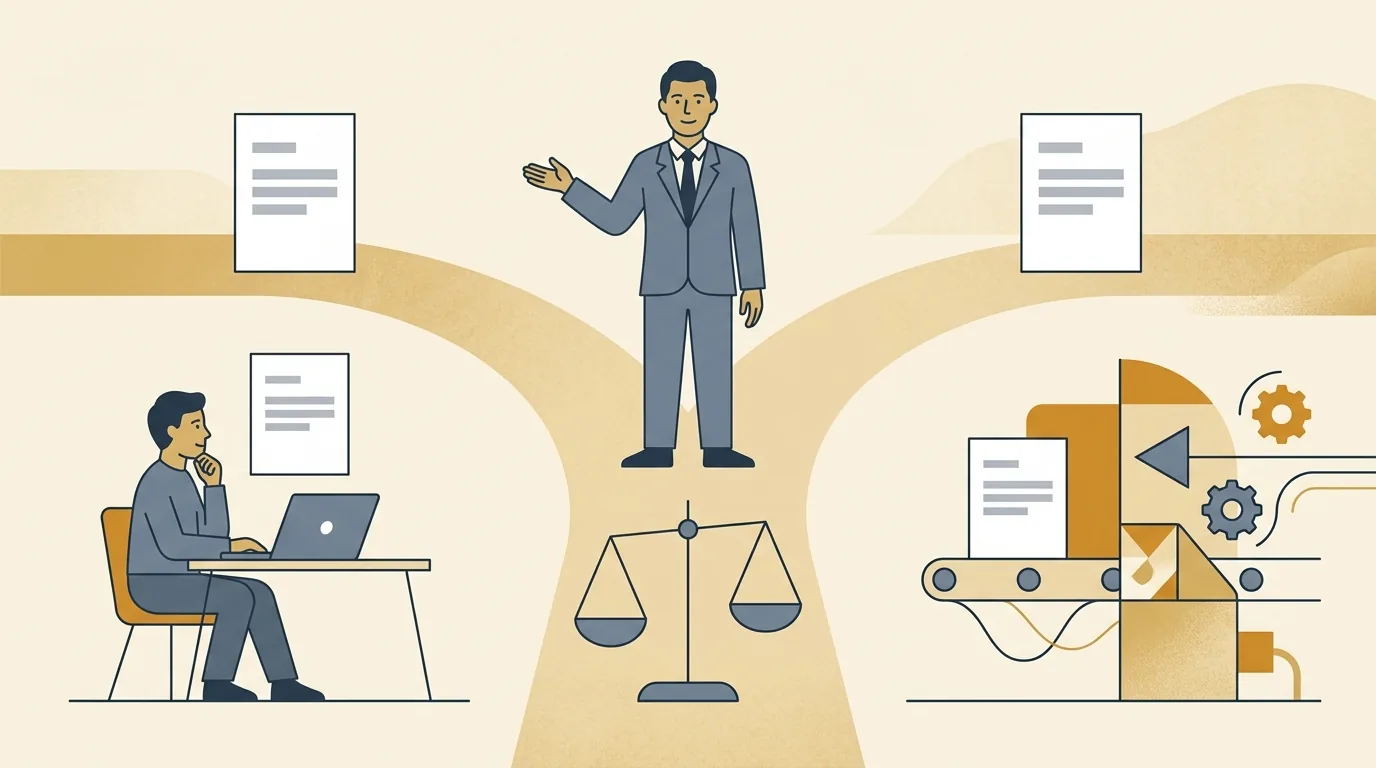
EvenUp is a venture-backed AI platform, not a simple drafting tool: it turns case files and medical records into demand packages and settlement valuations, with human reviewers checking the AI output before it goes out. The real alternatives split into three groups: full-case AI platforms like Supio and Eve that cover intake through litigation, not just demands; smaller human-reviewed demand services that price per letter instead of per seat; and general-purpose drafting tools that are cheap and fast but were never built for medical-record-heavy injury claims. Which one fits depends on your case volume and how much you're willing to trust an AI-only output with no attorney or paralegal reading it first.
Every guide comparing EvenUp to its rivals right now is written by one of those rivals. That's useful marketing copy, but it isn't useful buying advice, because a company comparing itself favorably to EvenUp has already decided what the answer should be. LegalizeAI doesn't sell demand letter software or take a cut of any vendor's revenue, so this comparison starts from what firms actually need to decide: service or software, per-demand or subscription, and how much human review sits between the AI draft and the insurance adjuster who reads it.
What does EvenUp actually sell?
EvenUp is built specifically for personal injury and plaintiff firms. Its core product, the Claims Intelligence Platform, ingests case files, medical records, and billing data, then produces demand packages, medical chronologies, and case valuations. A newer product line, Express Demands, promises a faster turnaround on more routine cases. Every demand and valuation carries some level of human review before delivery. That combination, AI drafting plus a review layer, is the company's actual pitch, not "AI writes your demand letters unsupervised."
The company has raised enough money to make that pitch credible at scale. EvenUp closed a $150 million Series E in October 2025 at a valuation over $2 billion, bringing its total capital raised to $385 million in roughly two years, according to LawNext's reporting on the round. At the time, the company said case volume on its platform had nearly doubled in six months to around 10,000 cases a week. That scale matters for a buying decision in one specific way: a company that size has built proprietary case-outcome data most smaller rivals cannot match, which is genuinely useful for settlement valuation. It also means you're one of many thousands of firms on a platform built for volume, not for one-on-one customization.
What EvenUp does not do is publish pricing anywhere public. That single fact drives most of the confusion in this space and most of what follows below.
Service or software, which model fits your volume?
The first real decision isn't which brand name to pick. It's whether you want a service (you send a case file, a human-reviewed demand comes back) or software (your own team operates the tool, drafts, and reviews). Full-case AI platforms like Supio and Eve sit closer to the software end: your staff logs in, runs the case through the platform, and edits the output before it goes out under your firm's own review. Standalone demand services sit closer to the pure-service end: a smaller outside vendor drafts the demand and hands it back, priced per document rather than per seat.
Volume decides which model actually saves you money and time. A firm running 200+ demands a month usually gets more value from software it operates in-house, because a subscription or per-seat license amortizes across volume and your team builds internal expertise in prompting and editing the tool. A firm running a handful of demands a month, or one going through a seasonal spike, is often better served by a per-demand service, since there's no software to learn and no monthly minimum to justify. The service model also shifts liability for a bad first draft onto the vendor's own reviewers rather than your paralegal's afternoon.
Who are the credible alternatives?
| Alternative | Service model | Pricing model | Human review layer | Integration |
|---|---|---|---|---|
| EvenUp | Software with review add-on | Undisclosed, case-based | Human reviewers check AI drafts before delivery | Claims Intelligence Platform, case management integrations |
| Supio | Software, full case lifecycle | Undisclosed, firm-level contract | Firm staff review and edit inside the platform | Intake through litigation, medical chronologies, demand drafting |
| Eve | Software, full case lifecycle | Undisclosed, firm-level contract | Firm staff review and edit inside the platform | Intake, case strategy, discovery, demand drafting |
| Filevine AI | Software layered on case management | Undisclosed, per-seat/module | Firm staff review inside existing Filevine workflow | Native to Filevine case management, widely adopted by PI firms already on the platform |
| Independent human-reviewed demand services (e.g. ApexDemands) | Outsourced service, no software to run | Flat per-demand fee, publicly advertised by some vendors | Every demand reviewed and finalized by a human before delivery | Simple submission, no case-management integration required |
The four platform tools (EvenUp, Supio, Eve, Filevine AI) compete mainly on how much of the case lifecycle they cover beyond the demand letter itself, and on the volume and shape of outcome data they've trained on. Independent demand services compete on price transparency and turnaround guarantees rather than platform breadth. You can browse verified listings for EvenUp, Supio, Eve, and Filevine AI directly, along with the rest of the case intelligence and eDiscovery category, on LegalizeAI.
What do these tools reportedly cost?
None of the four platform vendors above publish pricing, which is normal for enterprise legal software sold through a sales demo rather than a self-serve checkout. Third-party estimates for EvenUp specifically are all over the map because nobody outside the company has a full picture: some vendor comparison pages put base demand pricing around $300 with add-ons pushing it to $500-800, others estimate a monthly range in the low thousands depending on case volume, and firms on legal subreddits report simply not knowing the number until they get a quote. Treat any specific dollar figure you see for EvenUp, including in this article's sources, as a third-party estimate rather than a published rate, and get your own quote before budgeting against it.
The one place pricing gets genuinely transparent is the smaller, human-reviewed demand services, several of which advertise a flat per-demand fee publicly on their own sites rather than routing everyone through a sales call. That transparency is a real selling point if your firm wants to model cost per case before committing, but it also means you're comparing a boutique service's advertised rate against a platform vendor's unpublished one, which is not an apples-to-apples comparison until you've actually gotten both quotes in writing. For a broader look at how legal AI vendors price across categories, not just personal injury demands, see our legal AI pricing guide.
When is a general drafting tool enough?
Not every firm needs a dedicated personal injury platform. A solo practitioner or small firm handling a few straightforward soft-tissue cases a month, where the facts are simple and the medical records are thin, can often get a usable first draft from a general AI writing tool and then do the injury-specific work (damages calculation, policy limit strategy, medical record synthesis) by hand or with a paralegal. The tradeoff is real: a general tool has no training on personal injury outcome data, no medical record ingestion pipeline, and no built-in check against fabricated citations or invented facts, so every sentence needs a human read before it goes out regardless of which tool wrote it. For firms running any real volume of injury cases, or handling multi-provider medical records and complex liens, that manual gap is exactly what dedicated platforms are built to close. For more on where AI genuinely replaces attorney judgment and where it doesn't, see can AI replace a lawyer, and for a broader map of the personal injury AI landscape beyond demand letters, see AI for personal injury law firms.
The American Bar Association's first formal ethics guidance on generative AI is worth reading regardless of which tool you pick. ABA Formal Opinion 512 is explicit that a lawyer using generative AI retains full responsibility for the accuracy of anything filed or sent under their name, whether the AI drafted it, a vendor's review team touched it, or both. That obligation doesn't change based on which vendor's logo is on the software.
General information, not legal advice
This article compares software and services on publicly available features, reported pricing, and independent reporting. It is general information about legal technology, not legal advice, and it does not evaluate the merits of any specific case or recommend a course of action for a specific claim. Confirm pricing, contract terms, and data handling directly with each vendor before signing anything, and consult your own counsel or bar rules for questions about your specific ethical obligations when using AI-assisted drafting.
Frequently asked questions
Is EvenUp worth it for small PI firms?
It depends on case volume more than firm size. EvenUp is built and priced around firms running enough demands that a proprietary outcome-data advantage and a human review layer pay for themselves. A firm running only a handful of demands a month may find the cost harder to justify against a per-demand service or in-house drafting, since it won't generate enough volume to benefit from EvenUp's case-based pricing structure. Get a quote and compare it against at least one per-demand alternative before deciding, since EvenUp does not publish pricing publicly.
How does EvenUp price its demands?
EvenUp does not publish pricing on its website; it quotes case-based pricing after a sales conversation, based on case complexity and volume. Third-party estimates vary widely, from a few hundred dollars per demand to a monthly range in the low thousands depending on firm size, but none of these figures are confirmed by the company itself. Ask for a written quote tied to your actual expected volume rather than budgeting off any single third-party estimate, including the ones cited in vendor comparison articles.
What is the difference between EvenUp and Supio?
EvenUp is focused primarily on the demand and pre-litigation phase of a personal injury case: turning medical records and case files into demand packages and valuations. Supio is built to support the full case lifecycle, from intake through litigation, with demand drafting as one part of a broader case-intelligence platform rather than the central product. Firms that need litigation support and case strategy tools beyond the demand letter itself tend to look more closely at Supio; firms focused specifically on demand volume and valuation tend to compare EvenUp more directly against per-demand services.
Can ChatGPT write a demand letter?
A general-purpose AI tool like ChatGPT can produce a draft demand letter format and reasonable prose, but it has no training on personal injury settlement data, no built-in medical record ingestion, and no safeguard against inventing facts or citations that aren't in your case file. It can be a starting point for a simple, low-complexity case if every claim and figure in the output is independently verified against the actual medical records and case facts before it goes out. For any case involving multiple providers, liens, or disputed liability, a dedicated personal injury platform or a human-reviewed demand service closes gaps that a general drafting tool was never built to cover.
Know a demand letter tool that belongs in this comparison? Submit it to the directory and we'll verify it and add it.