AI Deposition Summary Tools and Services Compared
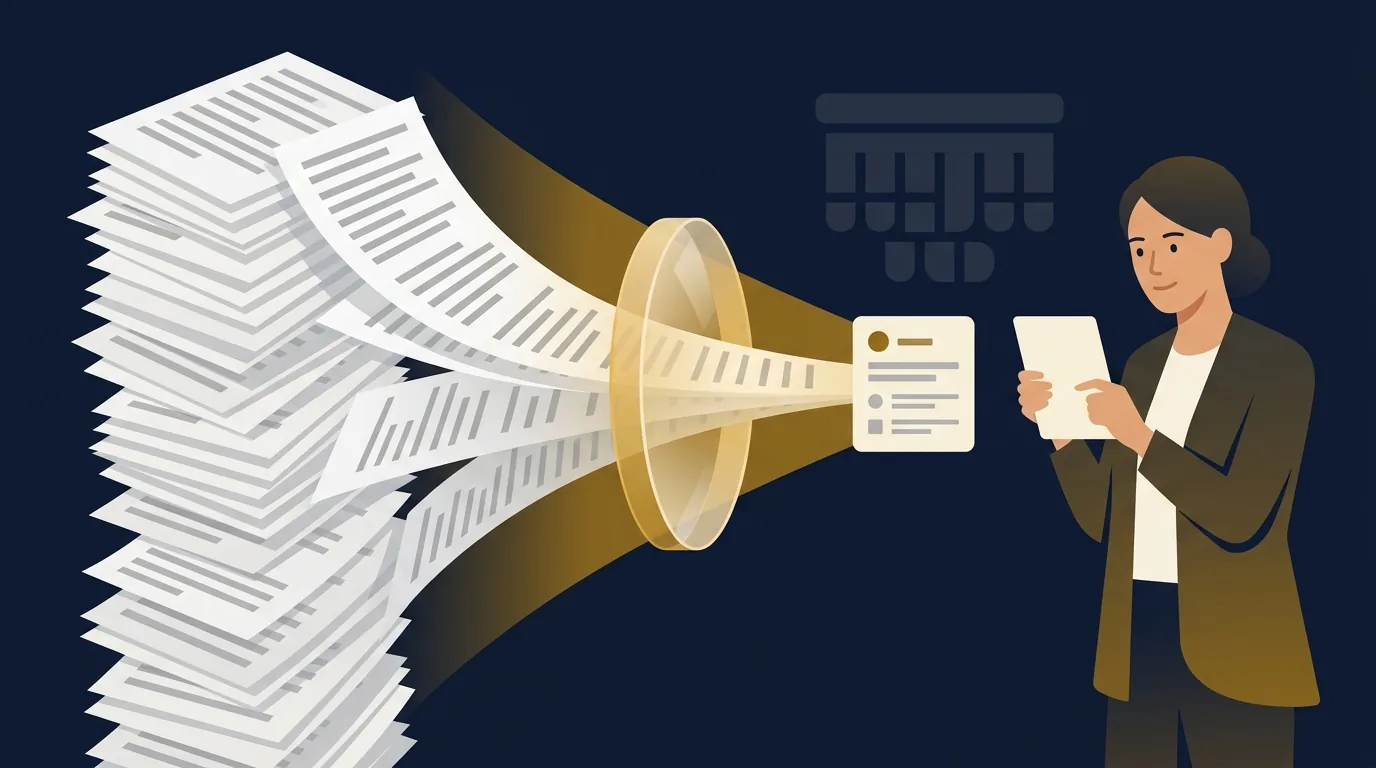
There is no single best AI deposition summary tool, because "deposition summary" describes three different products that get sold under one phrase. Court reporting platforms like Steno, Prevail, Skribe, Parrot and Verbit capture the proceeding and then summarize the record they created. Transcript services like Rev take a file you already have and turn it into a formatted, page-numbered transcript you can summarize. Litigation suites like CoCounsel, Everlaw and DISCO bolt summarization onto a platform you are already paying for. Which one you want depends on whether you are booking the deposition, processing a transcript someone else produced, or working inside a review platform. Get that wrong and you buy the right feature from the wrong layer of the stack.
A fourth option sits outside software entirely: a deposition summary service, where people write the summary from a transcript you send them. It has its own section below, with the per-page rates the services publish.
This is software evaluation and industry analysis, not legal advice.
We do not sell any deposition product, we do not take vendor money for rankings, and every tool named here is a listing in our own directory. That matters on this topic more than most, because the pages competing for this search are almost entirely written by companies that sell one of these products and would like the question to end with their own name.
What kinds of tools summarize depositions?
Split the market by where the tool sits relative to the record.
Capture platforms run the deposition itself. They schedule the reporter or digital reporter, host the remote proceeding, capture audio and video, and produce the transcript. Summarization is a feature that sits on top of a record they own end to end. Steno, Prevail, Skribe and Parrot all live here, and Stenograph sells the underlying speech and stenography software that reporting firms run.
Transcript and transcription services take a file. You upload audio, video, or an existing PDF transcript, and you get back text, a formatted legal transcript, or a summary. Rev and Verbit are the scaled players in this layer, and our AI legal transcription comparison goes deeper on the transcript itself. Parrot also sells its summary product standalone, so a transcript from any reporter can be uploaded as text or PDF.
Litigation and review suites treat the deposition as one more document in the case file. That is where CoCounsel, Everlaw and DISCO operate.
The reason the distinction is worth this much space: a summary is only as good as the record underneath it, and the page and line numbering that makes a summary usable in a brief comes from the transcript, not from the AI. A summary generated from a rough audio file will not give you citations you can put in front of a judge.
Two ownership facts also belong in the buying decision, because both happened recently enough that older comparison pages have not caught up. Parrot was acquired by Filevine in April 2025, and Rev acquired the deposition summary product SmartDepo in March 2025. If a page you are reading treats either of those as an independent company, it is out of date.
What formats does a deposition summary come in?
Before comparing vendors, decide which summary you need, because "a deposition summary" is at least four different documents and tools do not all produce the same ones.
| Format | What it looks like | Best for |
|---|---|---|
| Page-line | A table that follows the transcript in order, with a page and line reference beside each summarized passage | Drafting motions and briefs, impeachment, anything where you must cite the record |
| Topical | Testimony regrouped under subject headings such as liability, damages or prior injuries, with citations kept | Trial preparation and cross-examination outlines |
| Chronological | The events the witness described, re-ordered by when they happened rather than when they were asked about | Building a case timeline across several witnesses |
| Narrative | A readable memo of what the witness said and how they came across, with few or no citations | Client updates, settlement evaluation, a partner who needs the gist |
The page-line summary is the workhorse, and it is the format the phrase "deposition summary software" usually means. Ditto Transcripts, a human summarizing service, works to a rule of thumb that one page of summary should carry ten pages of testimony, so a 200-page transcript becomes a 20-page digest.
The format names vary by vendor. Parrot sells a page-line summary, a narrative summary and a custom topics summary. SmartDepo, the summary product Rev acquired, returns a page-line summary, a key admissions analysis, a short abstract and a memo organized by legal and factual issue from one upload. When you ask for a sample, ask for the format you will actually file from, not the one that demos best.
How do court-reporting platforms differ from AI summarizers?
Here is the full deposition bench in our directory, compared on the three things that actually separate them.
| Tool | What it summarizes or produces | Turnaround model | Pricing transparency |
|---|---|---|---|
| Steno | Transcripts from proceedings booked through Steno Connect, searchable and queryable via Transcript Genius | Full-service court reporting, transcript follows the proceeding | Pricing on request. Offers DelayPay deferred payment for contingency-fee firms |
| Prevail | Transcripts and synced video from depositions it captures, with testimony analysis tools on top | Full-service capture plus platform | Pricing on request |
| Skribe | Human-verified transcripts from digital capture, plus AI search, clipping and analysis of testimony | Digital capture with human verification | Pricing on request |
| Parrot | AI transcript drafts synced to audio and video, editable video clips, and AI summaries. Summaries also sold standalone | Draft transcript within 90 minutes of the proceeding | Pricing on request |
| Verbit | Legal transcription and captioning, including remote deposition transcripts | Service model, mixed AI and human review | Pricing on request |
| Rev | AI and human transcription, page-formatted legal transcripts, and AI deposition summaries through SmartDepo, which it acquired in 2025 | Upload a file, choose a speed and accuracy tier | Published rate card. The only fully transparent option here |
| Stenograph | Speech-to-text engine and reporter software rather than an end-user summary product | Software licensed to reporters and reporting firms | Pricing on request |
The pattern in that last column is the story. Six of seven are demo-gated, which is the norm across legal AI and something we cover in the legal AI pricing guide. Rev is the exception, and its published rates are worth quoting because they anchor what everything else should be measured against. Checked again on October 3, 2026, Rev's public pricing lists legal formatted transcripts at $2.25 per page for a rough draft delivered same day to three days, and $2.50 per page for its Legal Premium Transcript, the expert-verified tier, delivered same day to five days. General human transcription runs $1.99 per minute with a stated 99% or better accuracy guarantee in twelve hours or less. Its platform seats start at $25.49 per seat per month billed annually, and there is a free tier capped at 45 AI transcription minutes a month. SmartDepo publishes its own prices separately: $85 per summary bought one at a time, falling in steps to $50 at 41 or more, or a $99 per user per month platform subscription with summaries at a flat $25 each.
The other practical difference is who is responsible when the record is wrong. When a court reporting platform captures the deposition, the transcript is a certified work product with a chain of custody. When you upload a file to a summarizer, you own the accuracy problem. Under Federal Rule of Civil Procedure 30, the deposition is taken before an officer who administers the oath and later certifies the transcript, and the party noticing the deposition bears the recording costs. AI summarization changes none of that. It sits downstream of it.
Which research suites include deposition prep?
Three of the platforms most firms already own will summarize testimony without a separate purchase.
CoCounsel handles deposition preparation alongside research memos, document review and drafting, grounded in Westlaw and Practical Law content. Everlaw includes AI document summaries, coding suggestions and deposition preparation inside its e-discovery platform. DISCO's Cecilia assistant answers questions across the evidence record and generates summaries and review work product from it.
None of the three publishes a price, and none is bought for its deposition feature. That is the useful framing. If your firm already runs Everlaw or DISCO on a matter, running the transcript through the platform you already licensed costs you nothing extra and keeps the testimony in the same index as the documents. If you do not, buying an e-discovery platform to get deposition summaries is an expensive way to solve a narrow problem. Our AI e-discovery software comparison covers how those platforms differ, the category page for e-discovery and litigation tools lists all eleven, and our guide to evaluating legal AI tools covers the questions worth asking before any of those demos.
There is one more reason the suite route appeals to litigation teams. A deposition is capped by rule at one day of seven hours unless the parties stipulate otherwise or a court orders more, so the volume problem is not one enormous transcript. It is dozens of seven-hour days across a case, and the value of a summary tool compounds when everything lands in one searchable place.
Deposition summary services vs AI software: which should a firm buy?
A deposition summary service is the outsourced version of the job. You send a finished transcript, a person writes the summary, and you pay by the transcript page. Who the person is depends on the service: trained legal summarizers at some, legal nurse consultants for medical testimony at others. It is the model firms used for decades before software could do a first pass, and it has not gone away.
Several services publish their prices, which most of the court reporting platforms above do not. Two published rate cards, both checked on October 3, 2026:
- Ditto Transcripts, human-written summaries: $3.00 per transcript page with a 5 to 10 business day turnaround, or $2.50 per page at 11 business days or longer. Ditto says its summarizers cover about 20 pages an hour.
- LezDo TechMed, AI-assisted with human review by legal nurse consultants and medical-legal analysts: standard-turnaround summaries start at $1 per page, with 1 to 2 business days quoted for transcripts up to 200 pages.
Put a 200-page transcript through each model and the trade is plain.
| Route | Cost for a 200-page transcript | Turnaround | Who checks the summary |
|---|---|---|---|
| Human service (Ditto's published rates) | $500 to $600 | 5 or more business days | The service's summarizer, then you |
| Hybrid service (LezDo's starting rate) | From $200 | 1 to 2 business days | The service's reviewer, then you |
| AI software, per summary (SmartDepo, bought singly) | $85 | Minutes | SmartDepo states a legal professional reviews each summary, then you |
| A suite you already license | No added fee | Minutes | You |
Those are four vendors' own published figures, not a market average, and the page counts behind a real quote will vary. The shape holds, though. On this transcript a service costs roughly two to seven times what per-summary software does, and takes days rather than minutes. What you are buying with the difference is a person's judgment about which testimony matters and a second reader before the summary reaches you.
A service is the better buy when:
- nobody at the firm has time to verify an AI draft against the transcript, so the checking has to be purchased along with the summary
- the testimony is technical, such as a treating physician or an engineering expert, and a summarizer who knows the subject will catch what a general model flattens
- volume is low and irregular, so a subscription would sit idle between cases.
Software is the better buy when:
- you need the summary tonight to prepare for tomorrow's witness
- volume is steady enough that per-page service fees add up to more than a seat
- an associate or paralegal will check every citation regardless, which makes the service's review a second cost for the same work.
Nothing stops a firm from running both: software for the routine fact witnesses and a service for the expert depositions that decide the case. Our guide to AI for personal injury firms maps where depositions sit among the other case stages.
What changes when you outsource deposition summaries?
Sending a transcript to an outside summarizer does not move the professional responsibility. ABA Model Rule 5.3 covers nonlawyers "employed or retained by or associated with a lawyer", and requires the supervising lawyer to make reasonable efforts to ensure that person's conduct is compatible with the lawyer's own obligations. An outsourced summarizer is retained by you, so the rule reaches them.
In practice that is three questions for any service, and the same three apply to an AI vendor. Who will read the transcript, and where are they located? Is the transcript stored, for how long, and is it used to train anything? What is the confidentiality agreement, and will they sign yours? Our checklists on legal AI data security and on how to check a SOC 2 claim cover the software side of those questions in detail.
What does per-page vs subscription pricing mean?
Deposition work has been priced by the page for as long as there have been transcripts, and that convention survives into the AI products. It is worth understanding what each model rewards.
Per-page pricing bills for the artifact. Rev's legal transcripts at $2.25 and $2.50 per page are the clearest published example. Per-page is honest for irregular volume: a plaintiff-side firm running four depositions a quarter pays for four depositions. It punishes heavy users, and it gives the vendor no incentive to make a transcript shorter.
Subscription pricing bills for access. Rev's seat plans, at $25.49 per seat per month billed annually for the entry tier, bundle a monthly AI minute allowance rather than pages. Subscriptions favor teams with steady volume and predictable budgeting, and they are how most software-first entrants price. The trap is the allowance. A minute cap converts to a page cap at a rate you have to work out yourself, and a transcript that runs long eats into next month.
Per-summary pricing bills for the output and ignores length. SmartDepo is the published example, at $85 for a single summary and less at volume. It rewards long transcripts and makes budgeting simple, since a case with twelve depositions costs twelve summaries. Short transcripts subsidize the long ones.
Service pricing, the model behind most of the court reporting platforms, bundles the reporter, the room, the transcript and the technology into one quoted rate per proceeding. It is quoted rather than published, which is why six of seven rows in the table above say "pricing on request". Ask what happens to the transcript fee if you cancel late, whether video sync is included or an add-on, and whether expedited delivery carries a multiplier.
One cost that is not on any rate card: your own verification time. The ABA's first ethics guidance on generative AI, Formal Opinion 512, is explicit that lawyers using these tools still owe duties of competence, confidentiality, client communication and reasonable fees. A summary you have not checked against the transcript is not a finished work product, and the time to check it belongs in your comparison.
How should litigation teams choose?
Work backwards from the record rather than forwards from the feature list.
If you are noticing the deposition, buy at the capture layer. Steno, Prevail, Skribe and Parrot all produce the record and the summary together, which is the only configuration where page and line citations come free rather than being reconstructed. Ask about video sync, clip export, and how fast a rough draft arrives. Parrot states a draft transcript within 90 minutes of the proceeding, which is the aggressive end of that market.
If the transcript already exists, you are shopping in the services layer, and this is where published pricing lets you compare properly. Rev's per-page legal transcript rates and Parrot's standalone summary product both accept a file you already have. Parrot states SOC 2, HIPAA and HITECH compliance for that standalone service, which is the kind of claim to confirm in writing before uploading testimony.
If the deposition is one exhibit in a large matter, use the platform the matter already lives in. CoCounsel, Everlaw and DISCO are the ones you likely already pay for.
If the testimony may be read at trial, the transcript matters more than the summary. Rule 32 governs when a deposition can be used at a hearing or trial, including the unavailability grounds in Rule 32(a)(4), and none of that turns on how good your AI summary was. The summary is a work-product accelerator for your team. It is not evidence.
Two questions to put to every vendor on the shortlist, in any layer. Does the summary carry page and line citations back to the certified transcript, and can I see a sample from a transcript I supply rather than one you chose? A demo run on the vendor's own clean sample tells you less than one run on a messy real transcript with three speakers talking over each other.
Frequently asked questions
What is the best AI for deposition summaries?
The honest answer is that it depends which layer you are buying in. For teams that book their own depositions, a capture platform that produces the transcript and the summary together gives you citations you can rely on. For teams working from transcripts someone else produced, a transcription service with published per-page rates is easier to compare and easier to budget. For teams already running an e-discovery platform, the summarization built into that platform is usually the cheapest correct answer. Anyone who names a single winner without asking which of those you are is selling something.
How accurate are AI deposition summaries?
Accuracy has two layers, and vendors tend to talk about only one. The first is transcription accuracy, where human review still sets the benchmark: Rev publishes a 99% or better accuracy guarantee on its human transcription, and human-verified transcripts are the reason court reporting platforms charge what they do. The second is summarization accuracy, meaning whether the summary faithfully represents what the witness said and cites the right pages. No vendor in this market publishes an independent benchmark for that second layer, so treat unverified summaries as drafts. The verification duty is yours regardless of the tool, which is the point Formal Opinion 512 makes and the reason we track what courts have done about AI errors in filings.
What does AI transcription cost per page?
Rev is the only tool in our deposition category publishing a page rate, and as of October 3, 2026 it lists $2.25 per page for a legal rough draft and $2.50 per page for its Legal Premium Transcript. Everything else in the category quotes per proceeding or per seat, so a page rate has to be derived from a quote. When you do that math, ask whether the quote covers the reporter, the video, the sync and the expedite, because a low page rate with three add-ons is not a low price.
How much do deposition summary services cost?
The services that publish a rate charge by the transcript page. As of October 3, 2026, Ditto Transcripts lists $2.50 to $3.00 per page for human-written summaries depending on turnaround, and LezDo TechMed lists a starting rate of $1 per page for AI-assisted summaries with human review. On a 200-page transcript that is roughly $200 to $600. AI software prices the same job differently: SmartDepo charges $85 for a single summary regardless of length, and less with volume or a subscription.
Should a law firm outsource deposition summaries or use AI?
Outsource when the firm cannot spare anyone to verify the output, or when the witness is an expert whose testimony needs a subject-literate reader. Use AI software when turnaround matters, when volume is steady, and when someone on the team checks citations anyway. The duty to supervise the work and protect the transcript is the same in both cases, so the decision is about time and judgment, not about shifting responsibility.
Is there a free AI deposition summary tool?
Not one built for the job that stays free. SmartDepo offers a 7-day free trial with no credit card, which is enough to test it on one real transcript. Rev's free tier covers 45 AI transcription minutes a month, which is transcription rather than summarization. A general chatbot will summarize a pasted transcript at no cost, but it will not reliably keep page and line citations, and pasting testimony into a consumer tool raises the confidentiality questions covered in our data security guide.
Can AI help prepare for a deposition, not just summarize one?
Yes, and it is a different feature from summarization. CoCounsel and Everlaw both list deposition preparation alongside their summary tools, and SmartDepo's platform analyzes testimony across several depositions to surface contradictions and key admissions. Treat any AI-drafted outline the way you would treat a junior associate's first draft: a starting list of topics to be checked against the record before it goes into the room.
Can CoCounsel summarize depositions?
Yes. CoCounsel handles deposition preparation as part of a broader assistant that also covers research memos, document review and drafting, grounded in Thomson Reuters content. It is not a court reporting product, so it does not capture the deposition or produce the certified transcript. It works on the transcript you already have, and it is priced as an enterprise platform rather than per page. If deposition summarization is your only requirement, it is a large purchase for a narrow job. If you already run it, the feature is there.
Deposition tools sit inside a wider litigation stack that includes review, discovery drafting and evidence analysis. Browse the full set in our e-discovery and litigation category, where every listing is verified active, free to be listed, and never ranked by who paid. Paralegals evaluating the day-to-day end of this work may also want our roundup of AI tools for paralegals and the broader best AI legal tools list.